About EPIC
EPIC’s Lived Experience
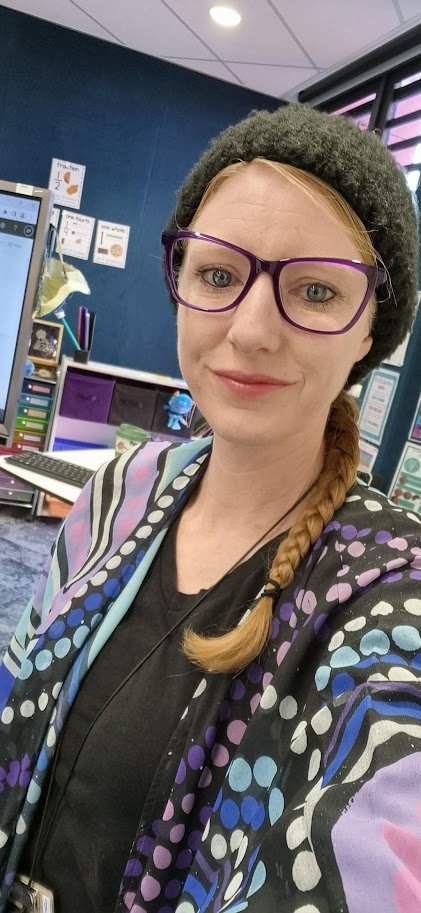
I founded EPIC as an autistic woman with ADHD and a nervous system disability. I am also the mother of AuDHD teenagers and partner to an AuDHD man.
Through being a neurodivergent parent to neurodivergent kids, I have a firsthand understanding of:
The gaps and challenges in accessing formal supports
Navigating education, community, and society with disabilities
Navigating the NDIS
The emotional load carried by families of people with disabilities
My work is shaped by real life – not just professional training.
Professional Background
I am an accredited primary school teacher in both mainstream and support class contexts. I am also an experienced inclusive program designer and consultant, helping clubs and community groups support neurodivergent children to participate, learn, and thrive.
For the past three years, I have been lead curriculum and resource developer for an adaptive karate class, and I also support neurodivergent children on the mat in mainstream classes every week.
Out of this lived and professional experience – and grounded in research science – I built the EPIC Participation Framework. It is the engine that underpins everything I offer: consulting services, parent courses, and support tools.
The EPIC Participation Framework
I developed this framework because I kept seeing the same problem. Organisations genuinely want inclusion to work. Families arrive hopeful. Yet participation falls apart – often in the first few sessions.
Why? Because three things stay invisible:
Hidden Expectations – rules everyone assumes you know but no one explains.
Hidden Barriers – barriers neurodivergent children face that organisations can’t see.
The Participation Tax – the extra sensory, social, cognitive, and emotional effort a neurodivergent child pays just to stay in a space not designed for them.
When that tax exceeds a child’s regulation capacity, overload happens. What looks like “behaviour” or “withdrawal” is actually participation breaking down. That is not a child’s failure. It is a design failure.
The EPIC Participation Framework closes that gap. It makes hidden barriers visible and participation costs affordable. It measures success not by attendance, but by Returnability – Does the child want – and feel able – to come back next week?
That is the heart of everything I do.
My Approach

Practical and realistic
Strengths‑based and child‑centred
Progress over perfection
Focused on small, meaningful changes and building staff confidence
No blame or judgement
Support that fits your setting, your people, your capacity
The EPIC Wave
My work is guided by the understanding that inclusion, like a wave, is dynamic, responsive, and shaped by context.
The wave represents inclusion as something that:
is always moving and changing
is responsive to its environment rather than rigid
adjusts its shape and direction when it meets resistance
Like a wave, inclusion is responsive, evolving, and shaped by context and conditions.
The wave reminds us that:
change happens over time
there is no perfect final state - only better alignment
what works for one group may need adjusting for another
The wave also symbolises:
rhythm and regulation
predictability within variation
calm, safety and flow
being gentle and steady, but powerful when needed