The EPIC Participation Framework: Finally, I Can Show You What I've Been Building
Estimated Reading Time: 3-4 minutes
I've been talking about EPIC concepts for a while now, including the Participation Tax, Hidden Expectations, and the Regulation Wave. I started calling them "insights from the EPIC Participation Framework."
But I never properly introduced the framework itself, because I didn't have the right resources to show you.
Then recently, I had a few conversations with industry professionals and fellow educators that really encouraged me. People were asking for something they could hold, something they could share with their teams. So I finally sat down and created an 8-page overview. It's not the full handbook (that's for certified practitioners), but it's enough to finally answer the question: what IS the EPIC Participation Framework?
Let me walk you through it.
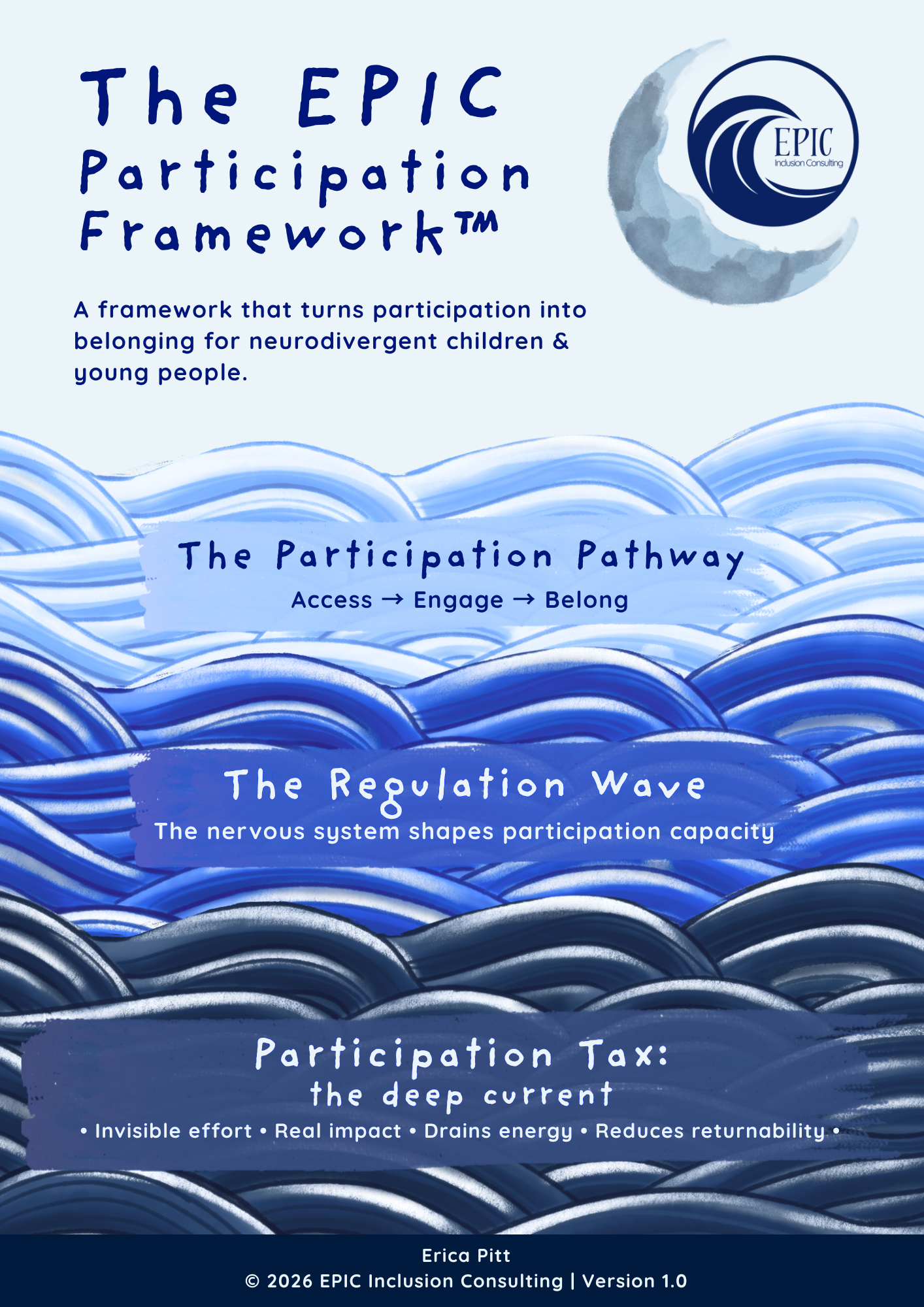
Page 1: Cover
I started building EPIC because I kept seeing the same problem. As a teacher, a community instructor, and an AuDHD parent, I watched neurodivergent children struggle to belong - not because they couldn't belong, but because the environments weren't designed with their belonging in mind. I wanted a practical, science-backed, lived-experience-informed way to fix that.
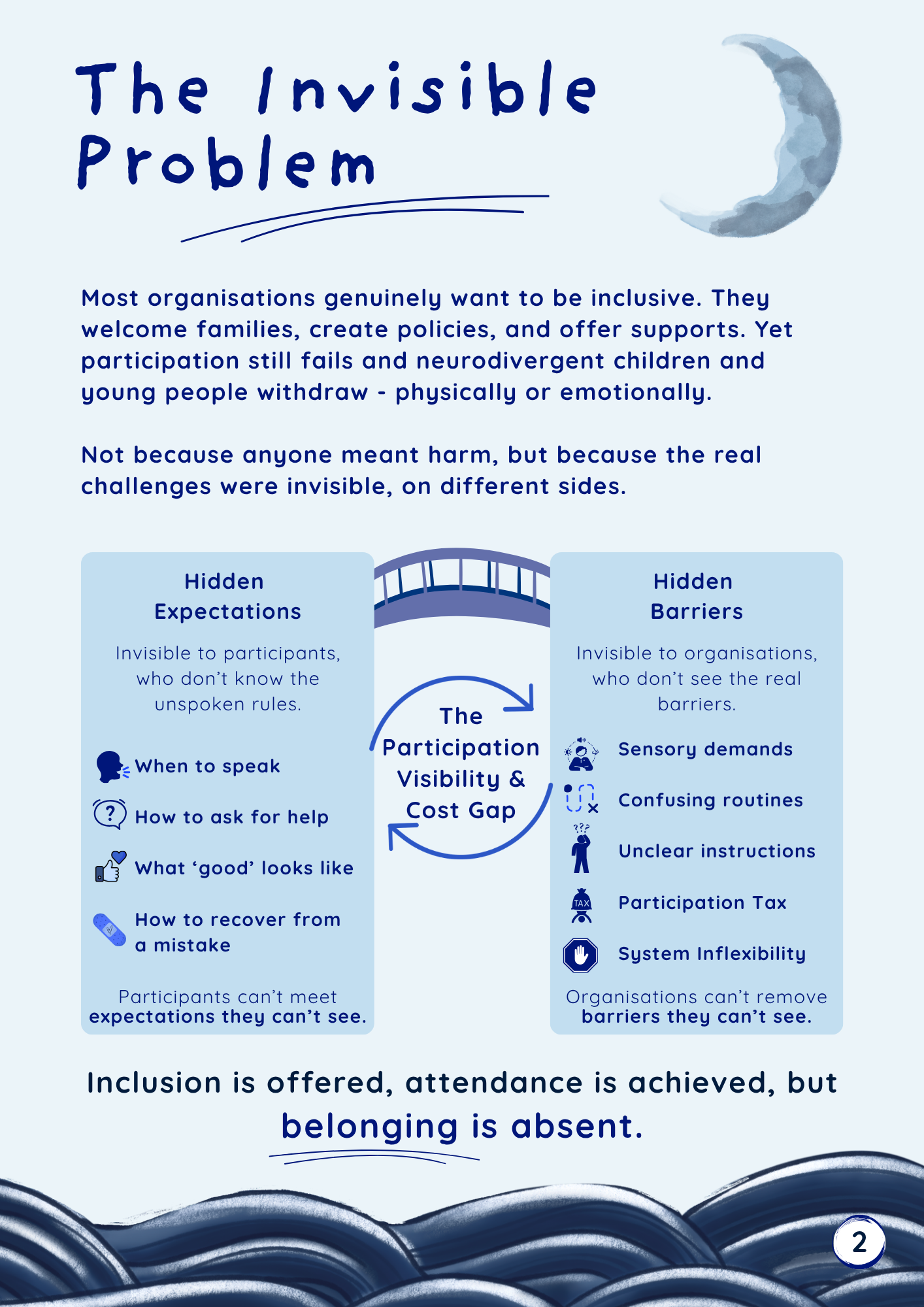
Page 2: The Invisible Problem
This page captures why inclusion fails so often. It's not about bad people or not trying hard enough, it's a matter of invisibility. Children can't see the Hidden Expectations. Organisations can't see the Hidden Barriers. Both sides are doing their best with only half the picture, and that realisation changed everything for me.
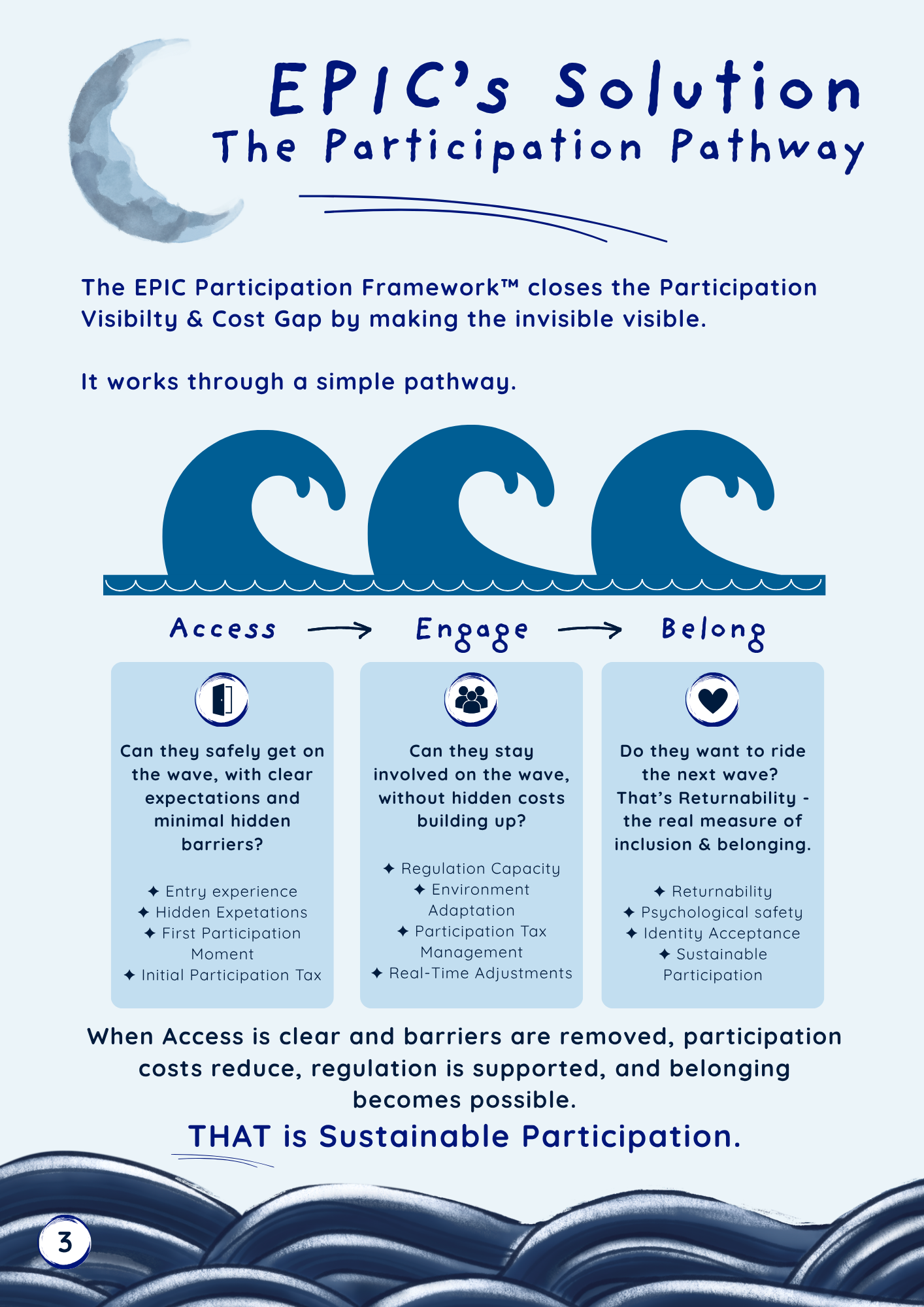
Page 3: EPIC’s Solution
The Pathway (Access → Engage → Belong) is the heart of the EPIC Framework. I've seen schools and programs focus all their energy on keeping kids busy (Engage) while ignoring how hard it is for some children to even get in the door (Access). And belonging? That's rarely tracked. EPIC gives you a simple way to look at the whole journey.
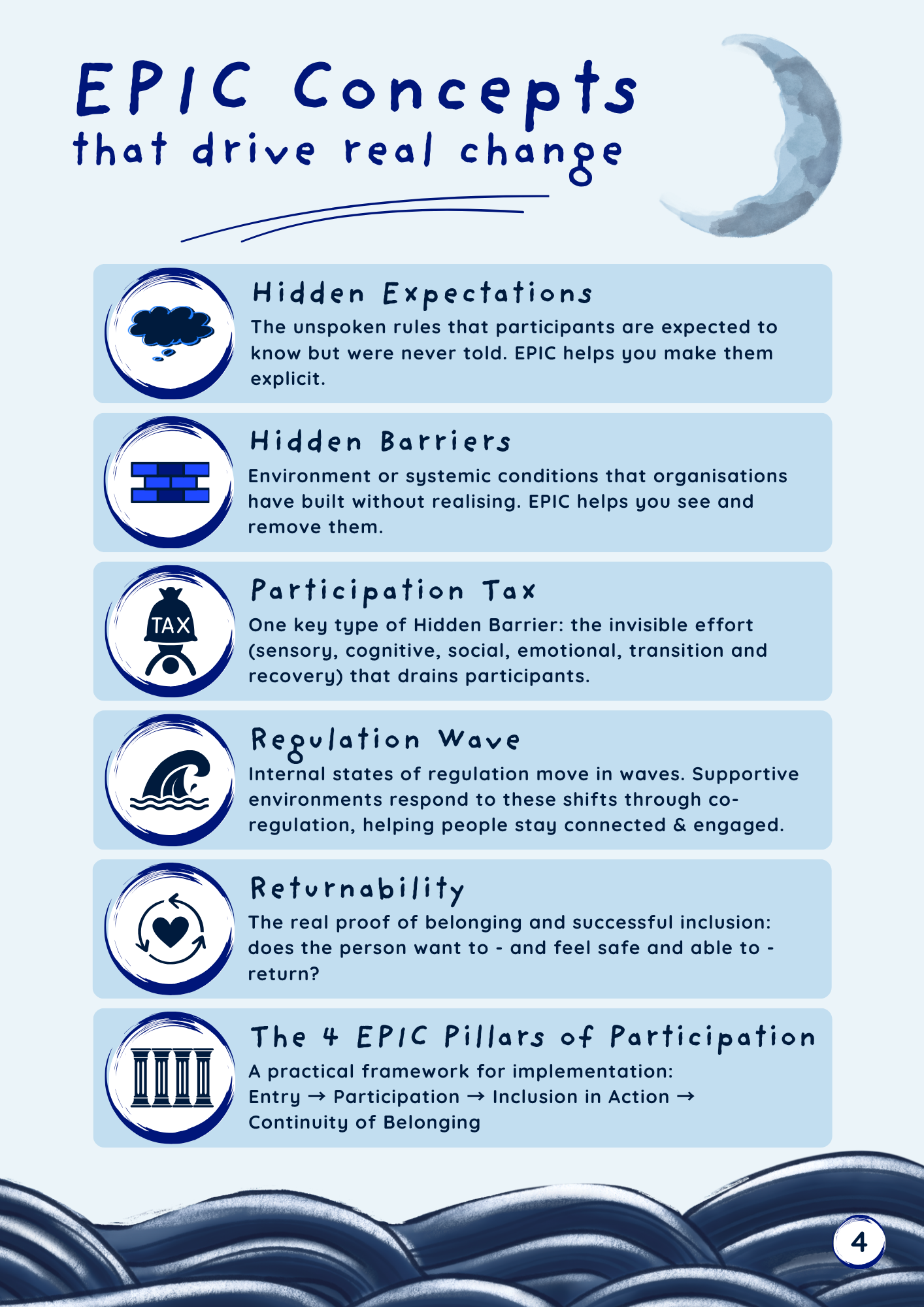
Page 4: EPIC Concepts
These six concepts - Hidden Expectations, Hidden Barriers, Participation Tax, Regulation Wave, Returnability, and the Four Pillars - are the vocabulary of the framework. If you've been reading my blog, you already know some of them. Seeing them together on one page shows how they work as a system.
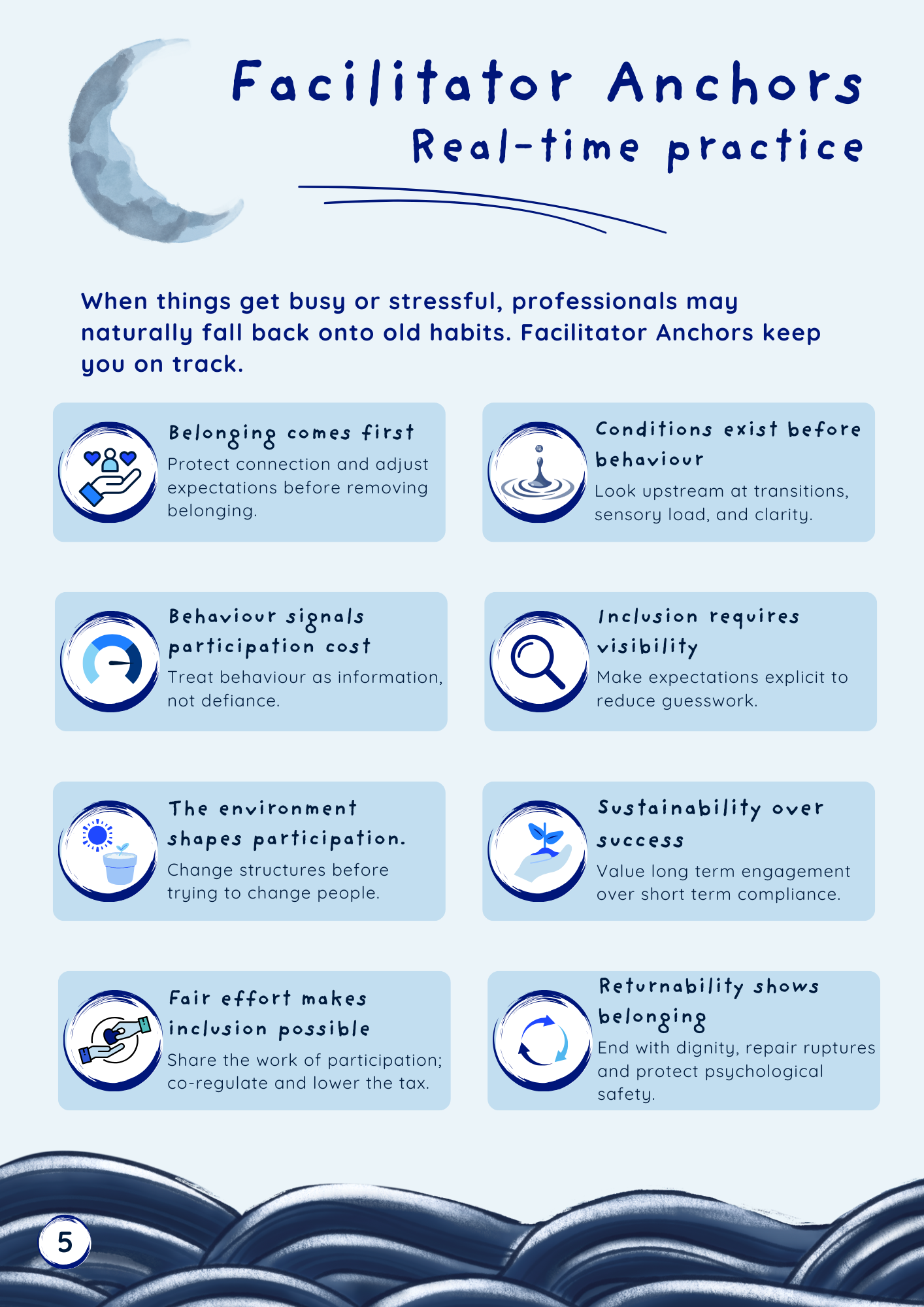
Page 5: Facilitator Anchors
When I'm in a busy classroom or a noisy dojo, I don't have time to think through the whole framework. These eight anchors are my shortcuts. I keep them in my back pocket for when things get stressful.
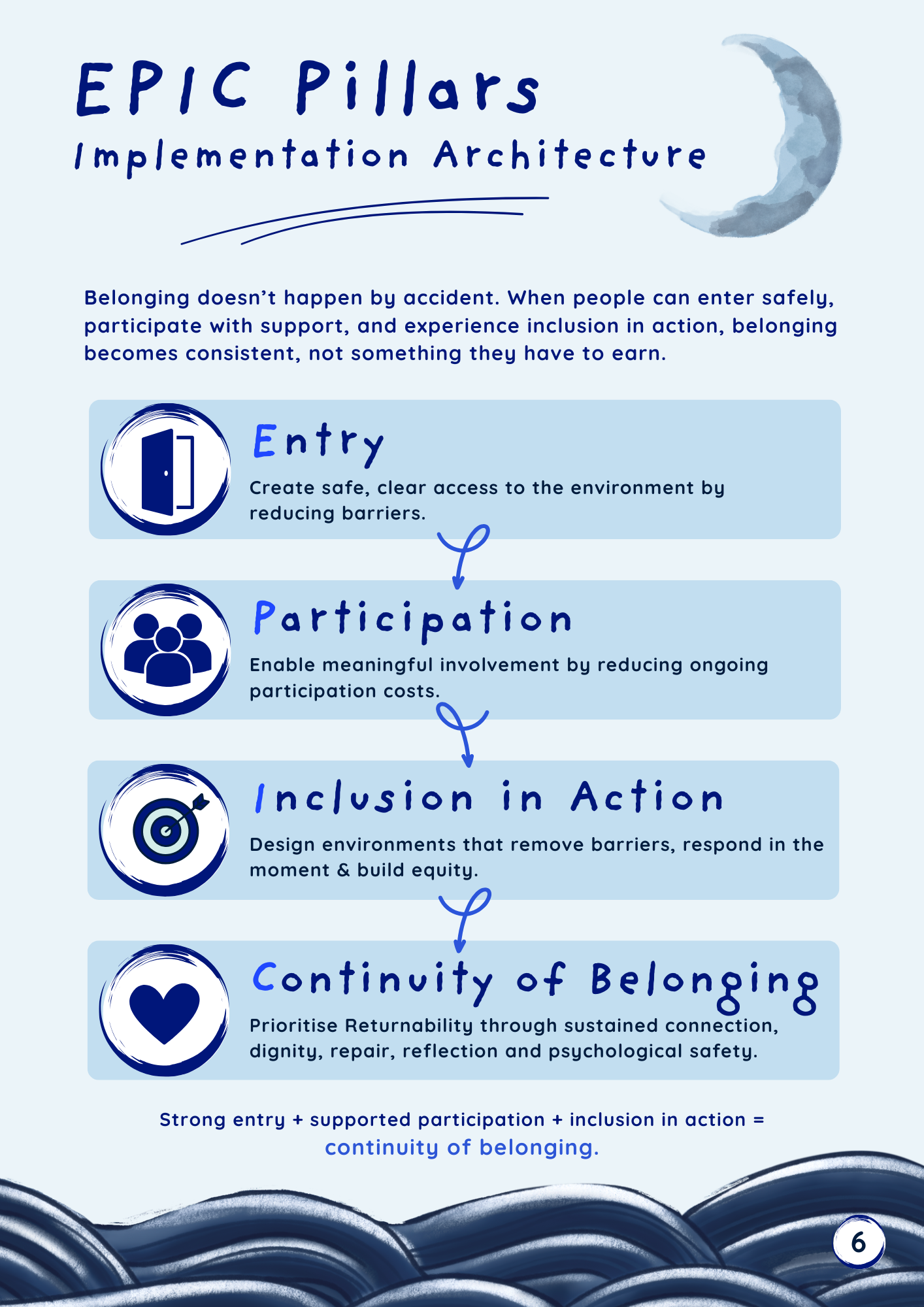
Page 6: EPIC Pillars
This is the "how to" page. Entry, Participation, Inclusion in Action, Continuity of Belonging is the practical structure that schools and organisations can actually implement. Not just theory but an actual, actionable roadmap.
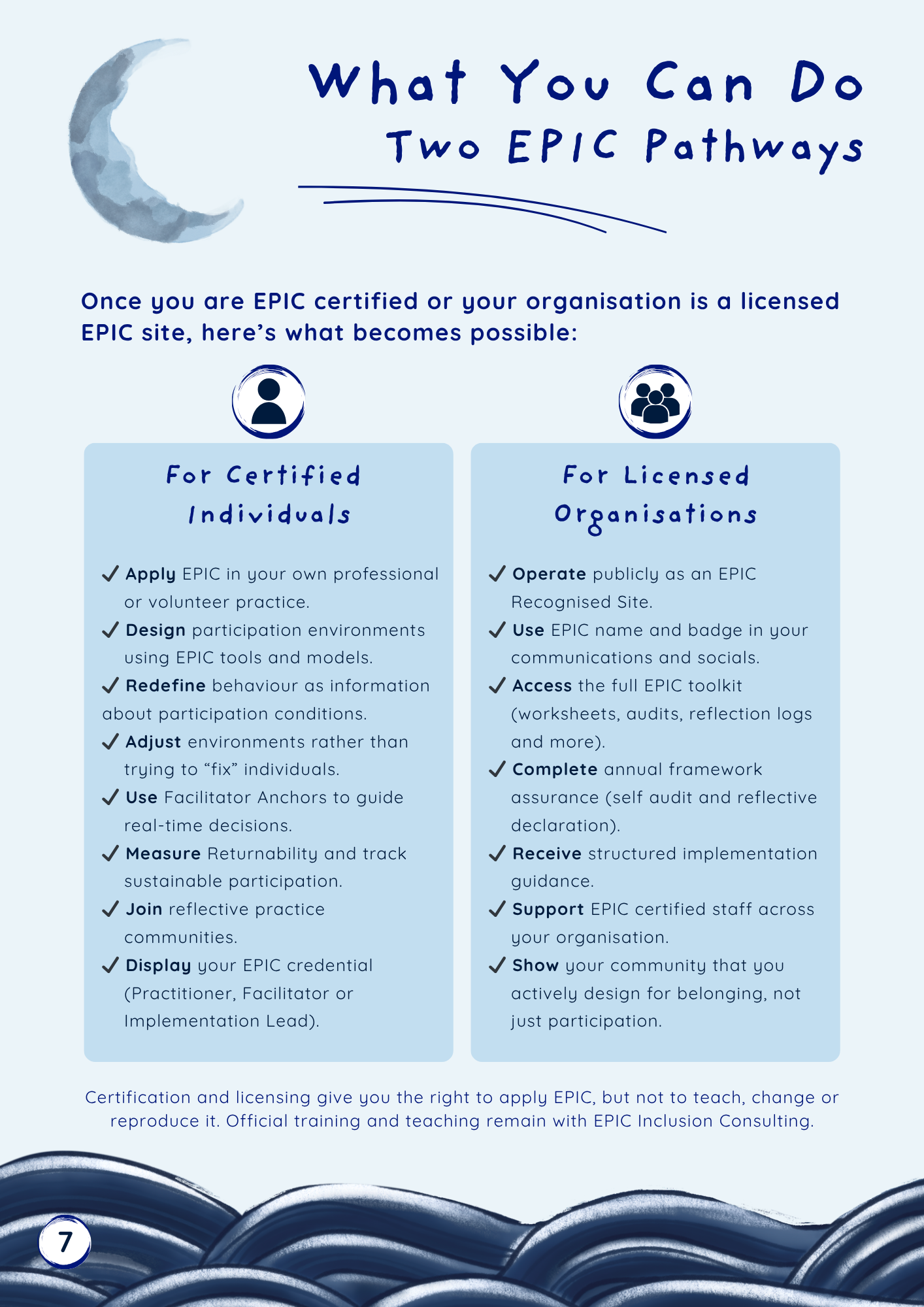
Page 7: What you can do with EPIC
This page shows the two main pathways I'm building towards: certification for individuals who want to apply EPIC in their own work, and licensing for organisations that want to operate as EPIC Recognised Sites.
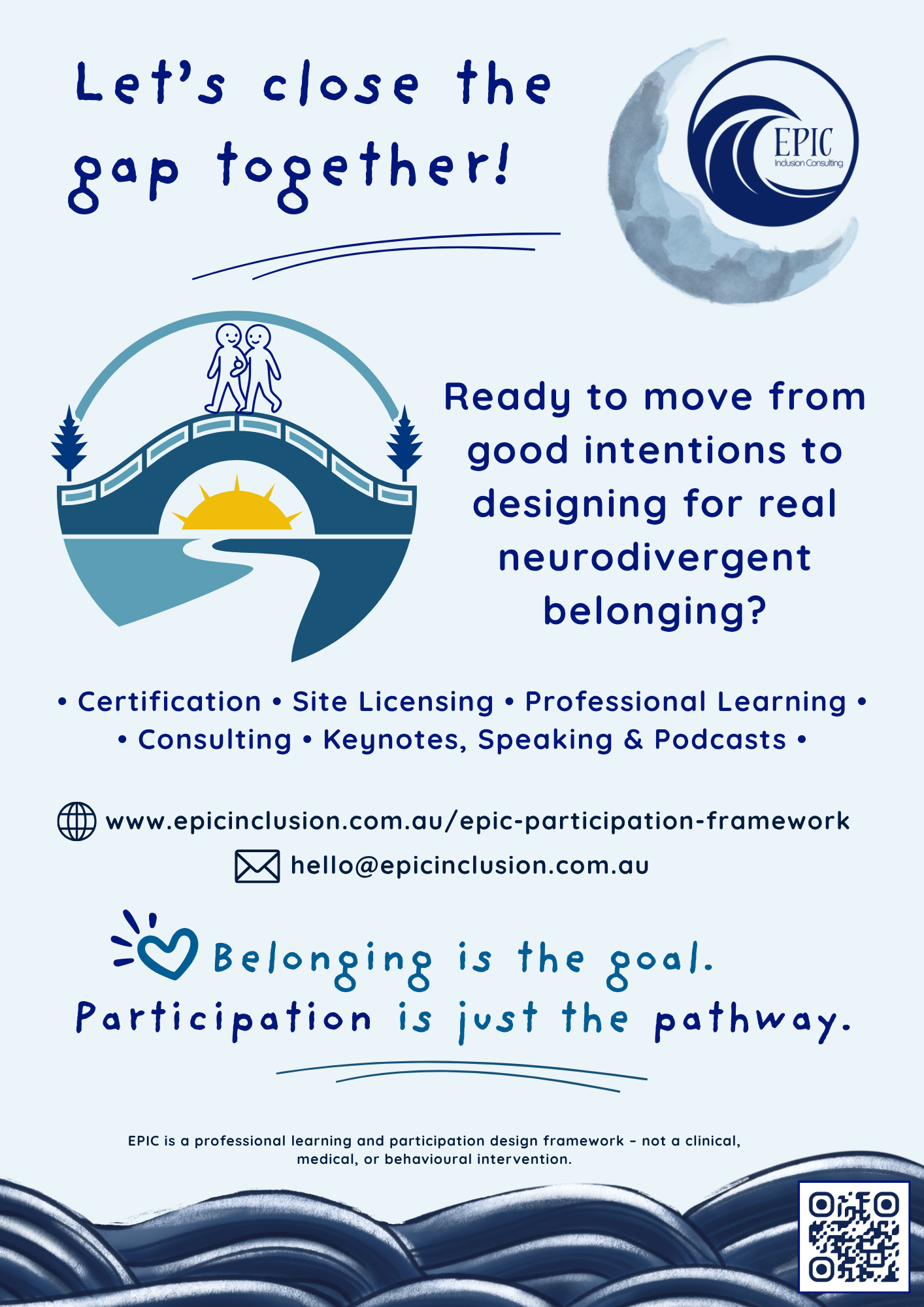
Page 8: Invitation
This is the invitation. Let’s close the Participation Visibility & Cost Gap together.
Where EPIC is heading (and how you can get involved)
I've been working on this framework for months and it’s getting close to being ready for public release. Nothing is launched yet, but here’s what I have planned.
Phase 1 (October 2026) - Professional learning, certification and licensing for teachers and school. This will include recognised elective PD hours across every Australian state and territory that are self-paced, video-led, and practical. Teachers will receive a certificate of completion for their logged hours. And for those who want to go further? An optional reflection task will lead to individual EPIC certification. Whole-school packages will also be available - ready to deliver over four 1-hour sessions.
Teachers are actively looking for PD that actually works. EPIC blends lived experience, professional practice, and current research into a practical map for designing neurodivergent belonging.
Phase 2 (Aiming for April 2027) – I’ll be opening professional learning, certification, and licensing to a wider audience: therapists, support workers, community leaders. These will also include nationally recognised hours in child-focused industries.
Phase 3 (Beyond) – Expanding the focus to designing belonging for neurodivergent adults. Whole-company packages, site licensing, individual certifications will be available. Because adults are just as impacted as children. We deserve belonging too.
Let's close the gap together
This week, I finally have the documents to show you what I've been building. Take a look at the PDF overview and please share it if it resonates.
If you're a teacher or school leader - Phase 1 is coming in October. I'll keep you updated.
And if you're involved in a conference, a podcast, or a speaking event where neurodivergent belonging belongs on the agenda, I’d love to talk.
Because neurodivergent belonging is the goal. Participation is just the pathway.
Visit these pages for more information:
Blog Post: The Hidden Cost of Joining In
Blog Post: The Participation Pathway: Why Some Children Check Out Before Participation Begins