The Participation Pathway: Why Some Children Check Out Before Participation Begins
Estimated Reading Time: 2-3 minutes
As an AuDHD adult, new environments still overwhelm me - the noise, the unspoken rules, the pressure to fit in. I've spent years learning to cope.
Neurodivergent children? They're often thrown into the same situations without any of those tools yet.
You’ve likely seen this before. Sometimes you welcome a new child to your classroom, your sports team, or your program, only to see them struggle and withdraw (physically and/or mentally) after a few days or sessions. Other times, you might notice a child who seemed fine during an activity but fell apart the moment it ended or later in the day.
You might be seeing a breakdown in the Participation Pathway.
While researching and developing the EPIC Participation Framework™, and reflecting on my own life, parenting and professional experiences, I’ve noticed that participation doesn’t happen all at once. It moves through three stages:
Access - getting in safely
Engage - staying involved
Belong - wanting to come back over time
Most of us focus on engagement - keeping children engaged during the activity. It’s a very important stage, but if a child can't access safely, or never reaches belonging, participation will eventually fail. And that child may act out or quietly check out.
For neurodivergent children, hidden barriers often block Access without anyone realising. And without access, engagement and belonging can never grow.
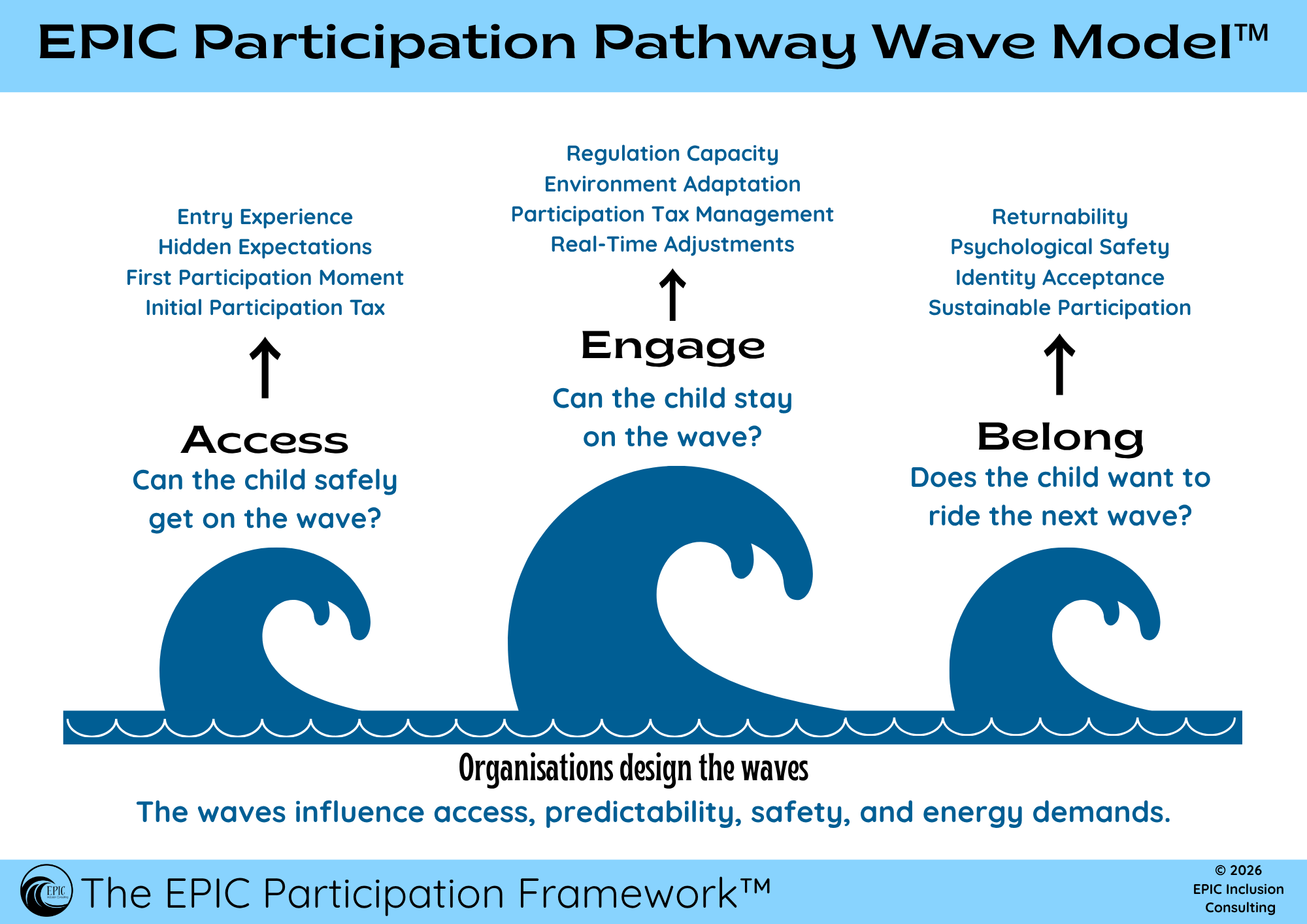
The EPIC Participation Pathway Model: Shows the three‑stage developmental pathway: Access → Engage → Belong.
What the three stages look like
Access starts before the child arrives. It includes how they're welcomed, whether they know the routine, and what the sensory environment feels like. When access is hard - confusing instructions, no visual schedule, overwhelming noise - the child is already paying a high Participation Tax before the activity even begins.
Engage is what most people think of as participation. Can the child stay involved? This depends on regulation support, clear expectations, and the environment adapting in real time. If the tax keeps building, engagement crumbles - fidgeting, withdrawing, or disrupting.
Belong is the goal. It doesn't come first. It grows when participation works well, again and again, over time. Belonging looks like a child who feels safe enough to be themselves, and who wants to come back next week.
What this means for educators and program leaders
You don't need a whole new program. You just need to look at each stage and ask: where is this breaking down?
For Access: Look at how families experience first contact. Is it warm and clear? Do children know what to expect before they arrive? A visual timetable on the door or a simple "what to expect" email can work wonders.
For Engage: Watch for early signs the Participation Tax is building - tense shoulders, going quiet, fidgeting. That's not defiance, it's information. Try lowering sensory input or offering a quick break before things escalate.
For Belong: Stop measuring success by attendance or compliance. Ask instead “does this child want to come back?” Protect their dignity at the end of every session. A calm, genuine "looking forward to having you back next time" matters more than you think.
For parents:
If your child comes home exhausted and dysregulated, or refuses to go to school or a program, they might be stuck in the Participation Pathway. Ask the leader: "How does my child access the program? What helps them stay engaged? Do they seem to feel they belong?" These questions shift the focus from fixing your child to improving the environment.
You don't have to figure this out alone
I'm developing the EPIC Participation Framework to help educators and program leaders design for every stage of the pathway. If you're noticing children slipping away and aren't sure why, I’d love to talk.
One last thought
Belonging doesn't start the moment a child walks through the door. It grows from small, safe participation experiences, repeated over time. When you design for the whole pathway - Access, Engage, Belong - children stop just showing up. They start belonging.
Visit these pages for more information:
Blog Post: That Hidden Cost of Joining In (And Why Some Kids Pay More)