
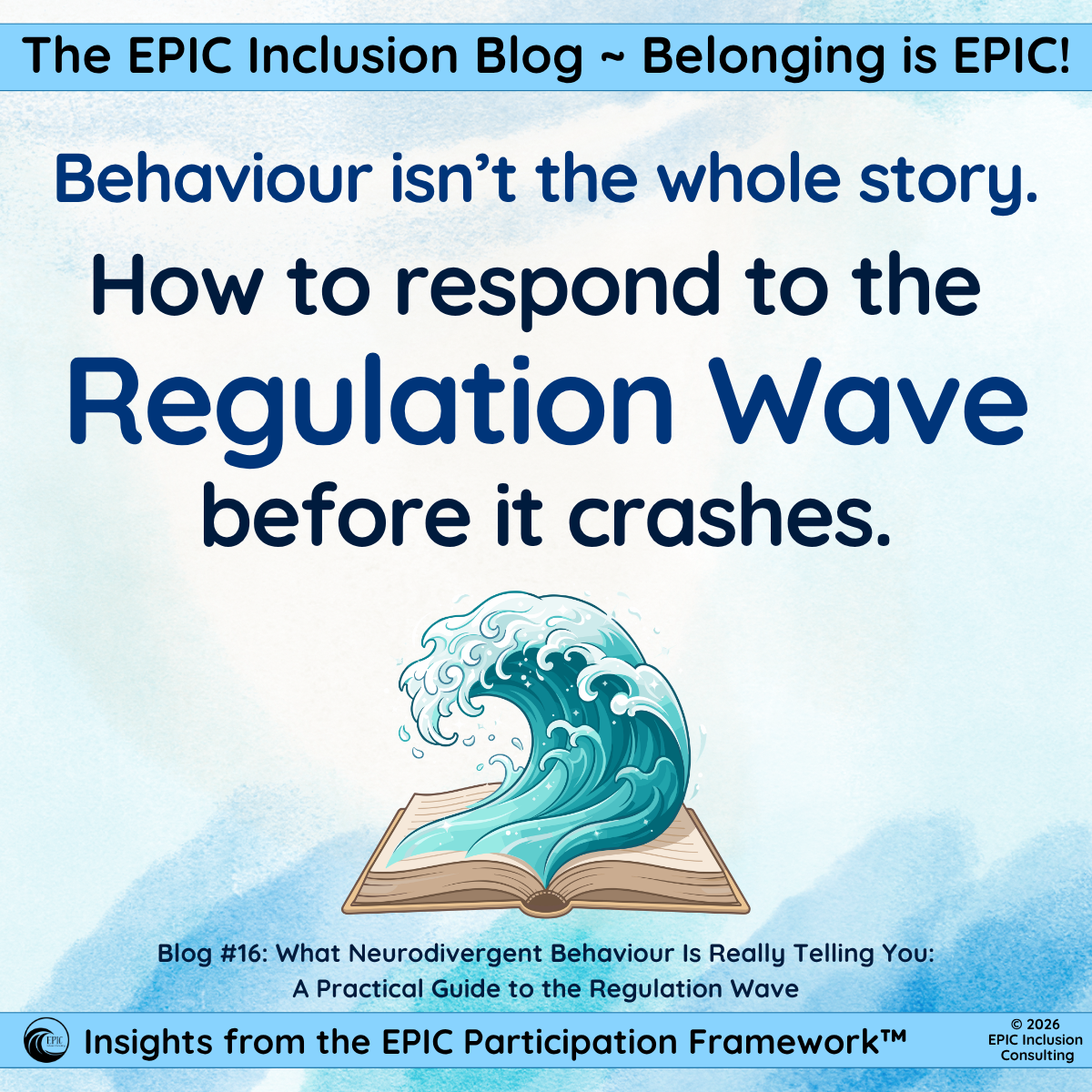
What Neurodivergent Behaviour Is Really Telling You: A Practical Guide to the Regulation Wave
When a neurodivergent child melts down, shuts down, or zones out, their behaviour is telling you something. The Regulation Wave helps you understand and respond in a way that actually makes a difference. This post walks you through each state and what to do (and what not to do) in each one. 💙
Estimated Reading Time: 4-5 minutes
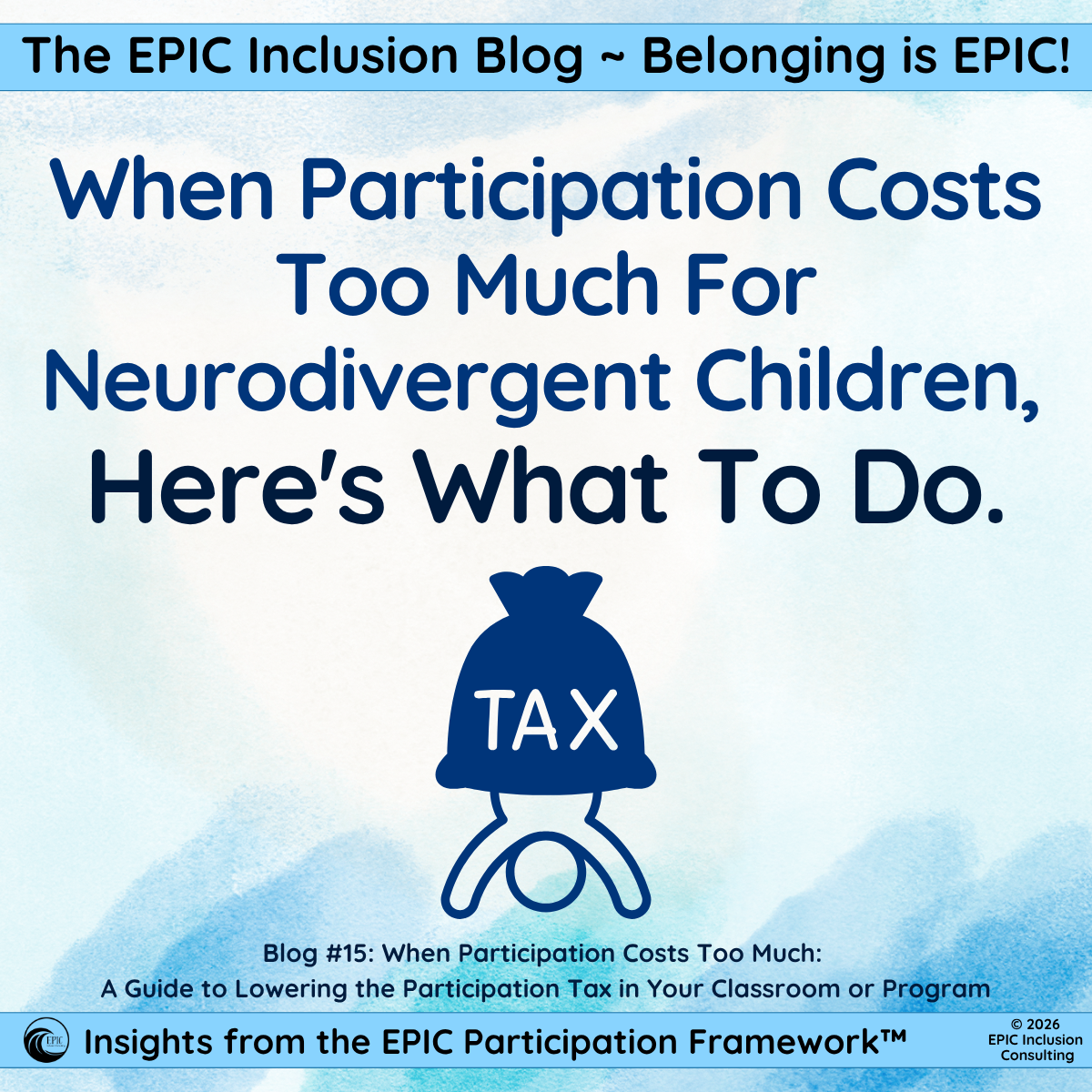
When Participation Costs Too Much: A Guide to Lowering the Participation Tax in Your Classroom or Program
The Participation Tax is the hidden effort (sensory, cognitive, social, emotional, transition, and recovery) required to participate, and it builds fast in neurodivergent children. This post explains why, breaks down the six parts of the Participation Tax, and walks educators and program leaders through practical steps to lower it. 💙
Estimated Reading Time: 4-5 minutes
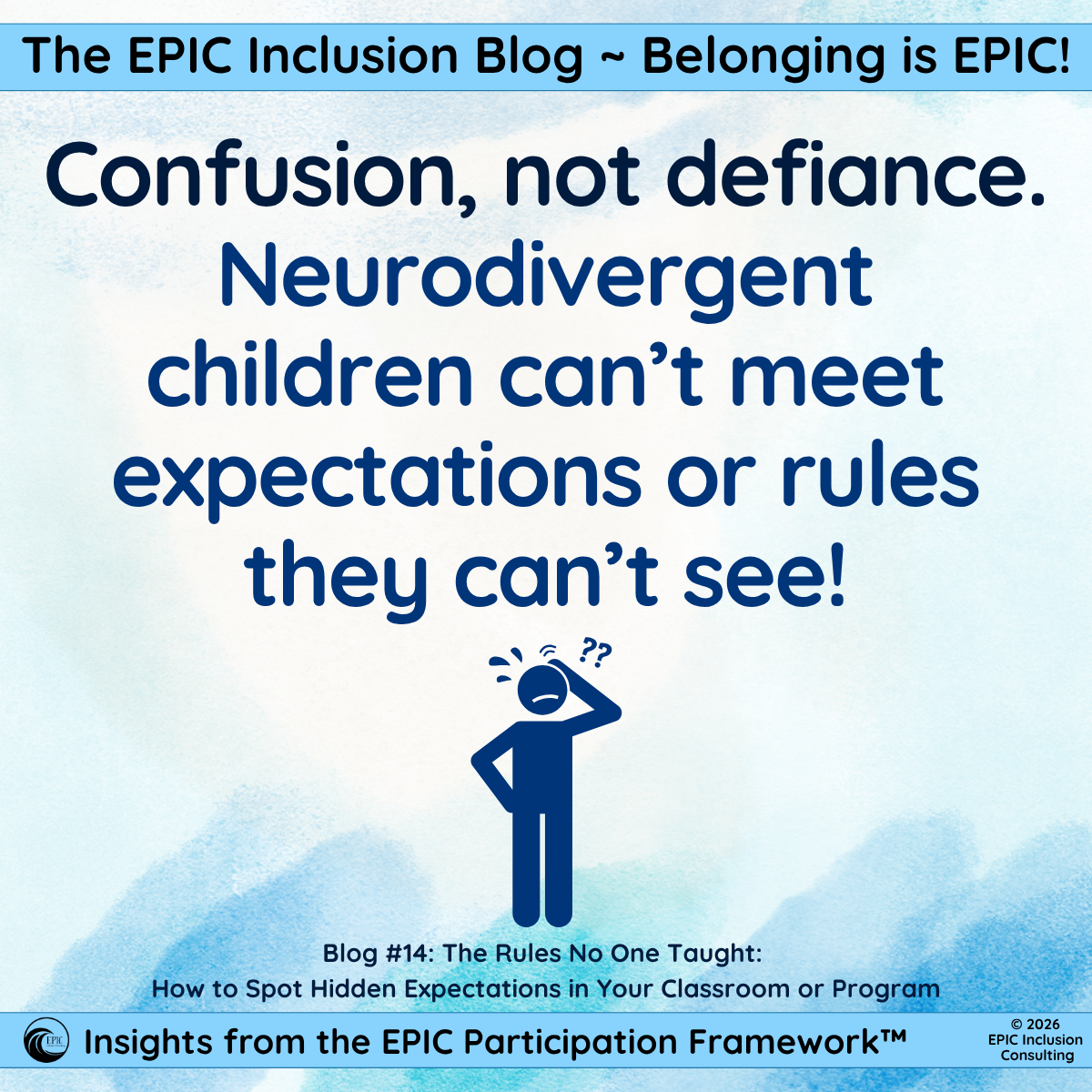
The Rules No One Taught: How to Spot Hidden Expectations in Your Classroom or Program
Hidden Expectations are the unspoken rules all children are expected to know, but were never taught. For neurodivergent children, who may not naturally pick up on unspoken social norms, they can be a significant barrier to participation and belonging. This post shows you how to spot them and make them visible in your classroom or program. 💙
Estimated Reading Time: 4-5 minutes
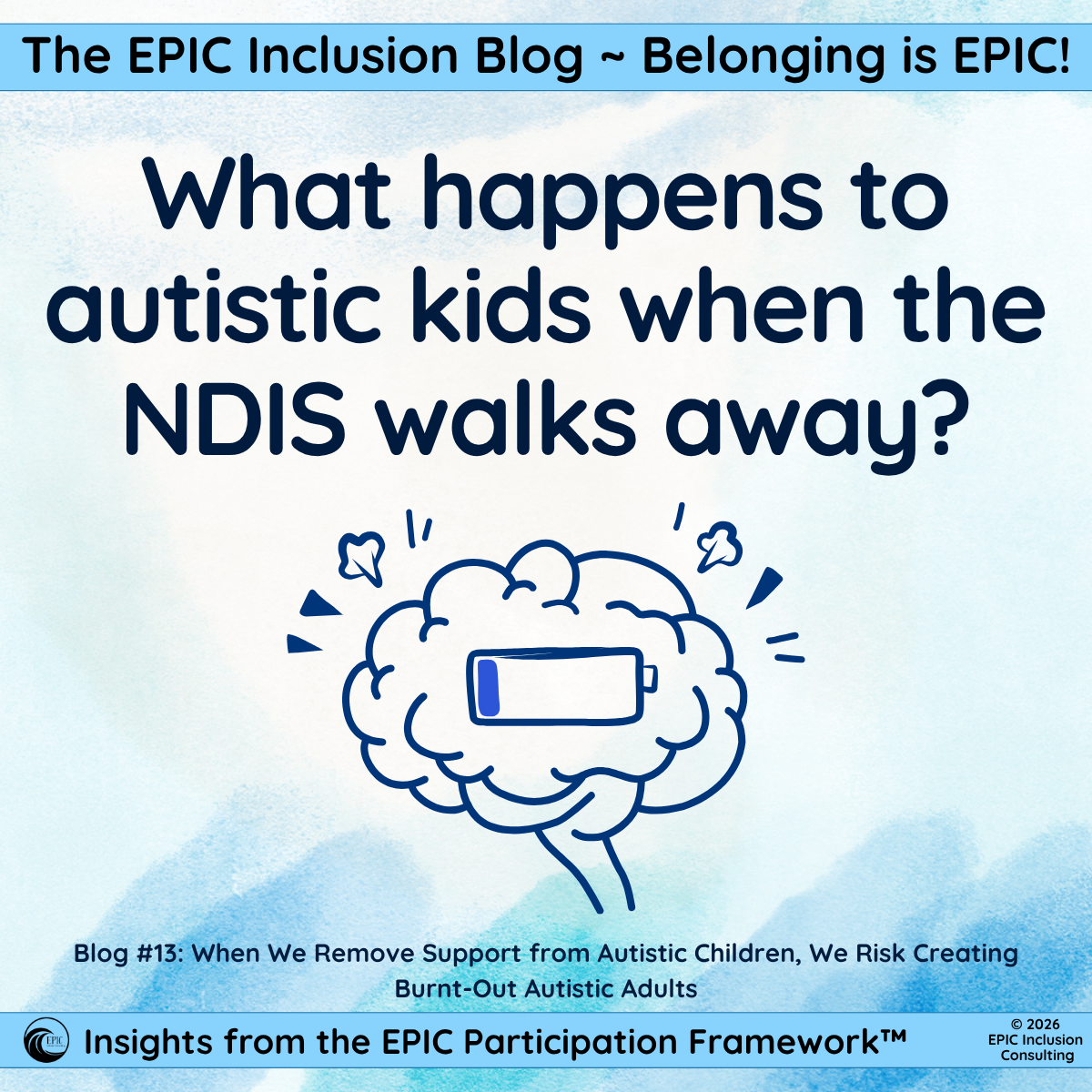
When We Remove Support from Autistic Children, We Risk Creating Burnt-Out Autistic Adults
What happens to autistic kids when we remove their support? The NDIS is removing thousands of autistic Australians from the scheme without understanding the significant risks that poses for their futures. This post is about what that can cost, from someone already paying the price. 💙
Estimated Reading Time: 4-5 minutes
Just Being in the Room Isn't Enough - Participation Without Belonging
Attendance and compliance don't tell you whether a child belongs. This post explores what participation without belonging looks like in schools and community programs, what genuine belonging looks like instead, and where educators and program leaders can start. 💙
Estimated Reading Time: 3-4 minutes
Returnability: The Measure of Inclusion That Actually Matters
Attendance tells you a child showed up, but attendance isn’t belonging. For neurodivergent children, the most honest measure of belonging is Returnability, and most of us aren't measuring it yet. Here’s what it is, what it looks like in compulsory and non-compulsory settings, and why it matters. 💙
Estimated Reading Time: 4-5 minutes
Co-Regulation: Sharing the Work of Calming Down
Telling someone to "calm down" rarely works, especially if that someone is a neurodivergent child. Co-regulation is the process of calming down with someone else, and it's how self-regulation is learned. This post explores the Regulation Wave, what co-regulation looks like at each stage, and how educators, program leaders, and parents can put it into practice. 💙
Estimated Reading Time: 4-5 minutes
The Hidden Cost of Teaching (Even When You're Brilliant at It)
I'm an AuDHD teacher. I love my job, and I'm brilliant at it - but the Participation Tax of casual teaching (and even contract or permanent roles) is rarely talked about. Here's what it looks like, what helps, and why supporting neurodivergent teachers keeps passionate educators in the classroom. 💙
Estimated Reading Time: 3-4 minutes
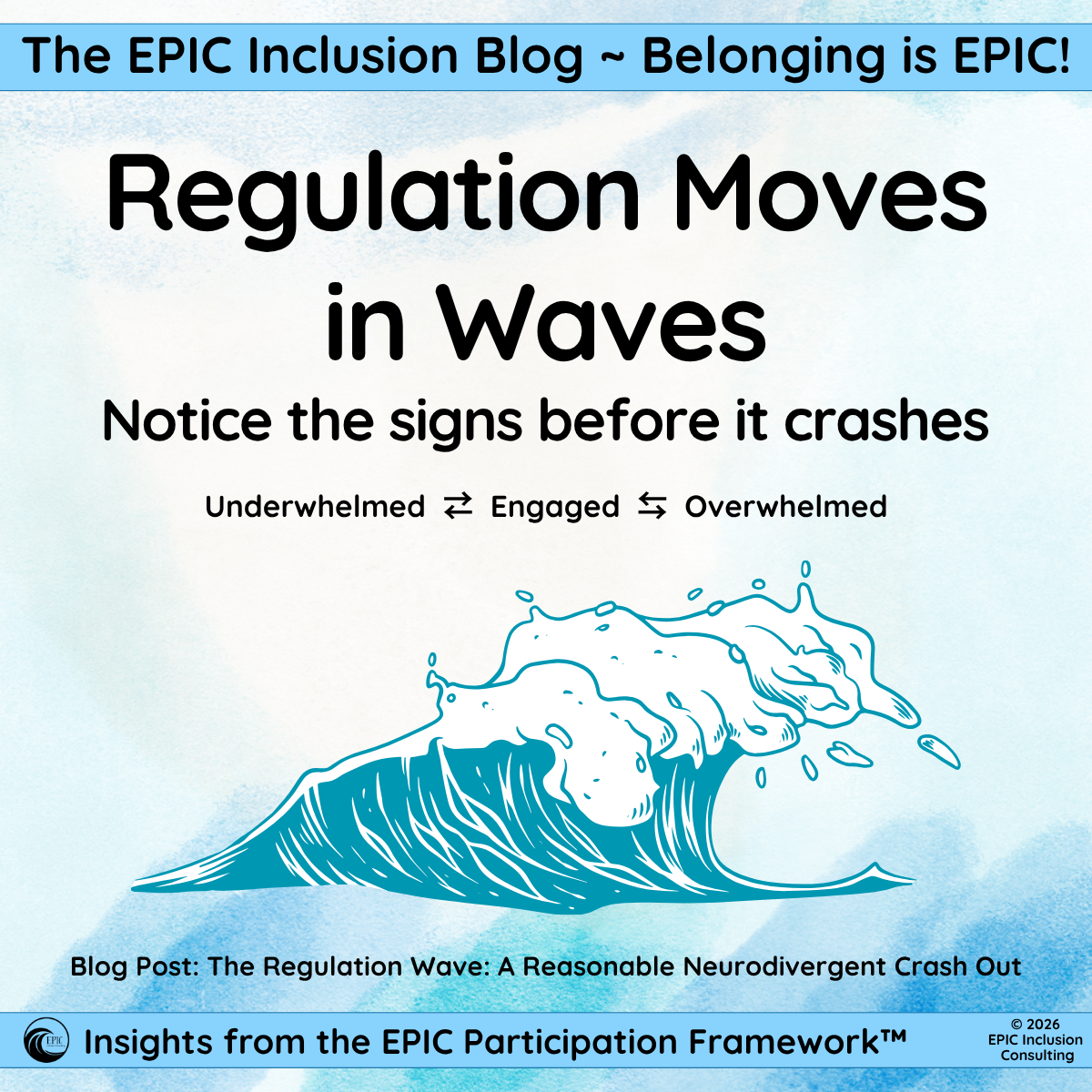
The Regulation Wave: A Reasonable Neurodivergent Crash Out.
Every child moves through regulation states - Underwhelmed, Engaged, Overwhelmed. Noticing quiet signs before a crash or slump helps educators and leaders respond with curiosity, not control. A reasonable crash out is information, not defiance. Discover how to support neurodivergent children through underwhelmed, engaged, and overwhelmed states, with practical tips for classrooms and programs.
Estimated Reading Time: 3-4 minutes
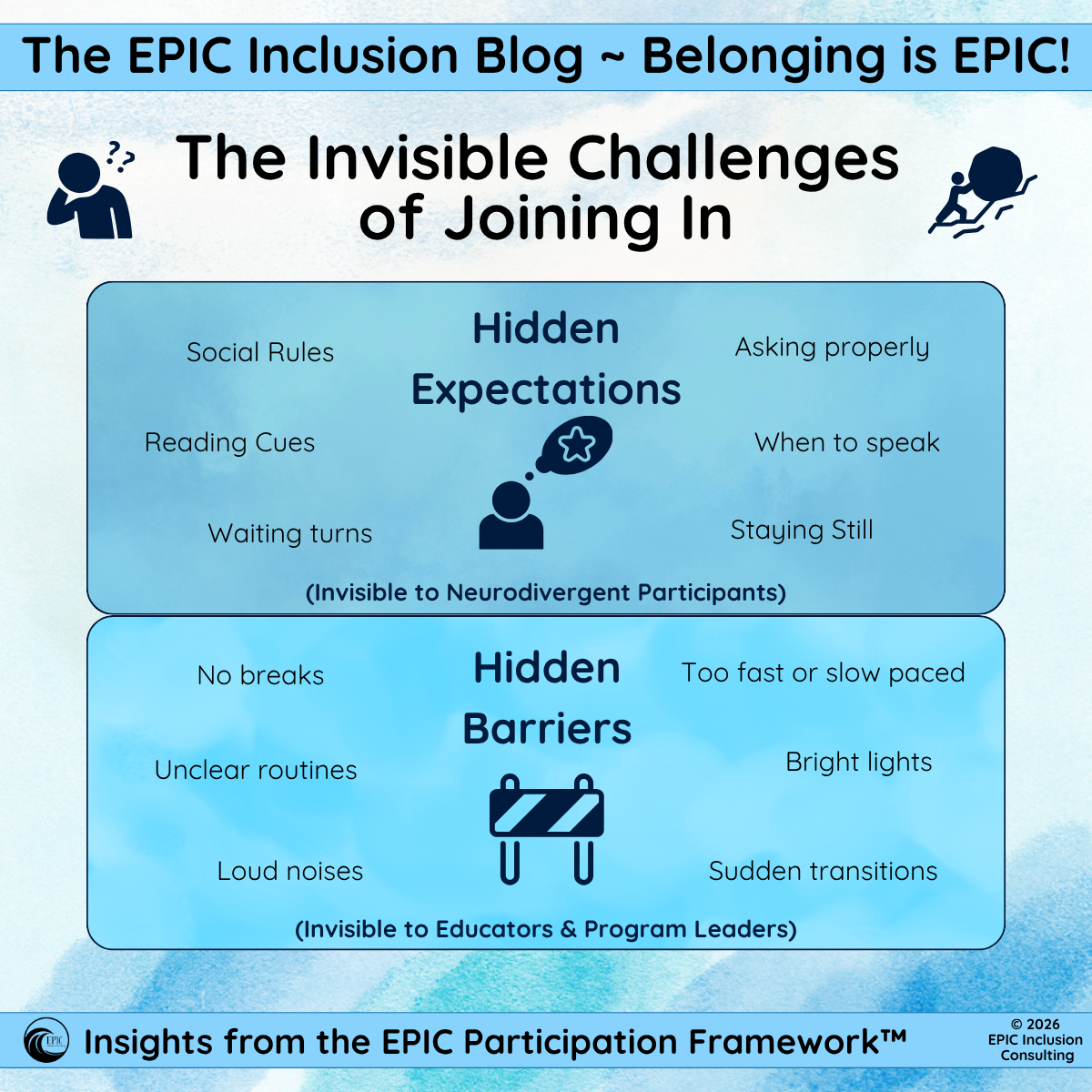
Hidden Expectations & Hidden Barriers: The Rules No One Tells You & The Challenges No One Sees.
Despite the very best intentions, sometimes it can seem impossible to make inclusion work. Two invisible forces might be at play: Hidden Expectations (rules no one teaches) and Hidden Barriers (effort no one sees).Here's what educators, program leaders and parents need to know.
Estimated Reading Time: 3-4 minutes
The Participation Pathway: Why Some Children Check Out Before Participation Begins
Participation happens in three stages: Access (getting in safely), Engage (staying involved), and Belong (coming back over time). Here's what educators and program leaders need to know.
Estimated Reading Time: 3-4 minutes

Making Participation Impossible: When NDIS Supports Are Removed, The Participation Tax Skyrockets
When NDIS supports are cut, the hidden cost of participating (sensory, cognitive, social, emotional, transition and recovery) rises dramatically for neurodivergent children and adults. Here's what that looks like.
Estimated Reading Time: 3-4 minutes

That Hidden Cost of Joining In (And Why Some Kids Pay More)
The Participation Tax is the hidden cost of taking part – sensory, cognitive, social, emotional, transition, and recovery. Here’s what organisations and parents need to know.
Estimated Reading Time: 3-4 minutes