When We Remove Support from Autistic Children, We Risk Creating Burnt-Out Autistic Adults
Estimated Reading Time: 4-5 minutes
There are whole generations of autistic adults who spent their childhoods learning how to look like they were coping.
Many of us late-diagnosed Autistics grew up as bright, capable people-pleasers who were desperate to do the right thing. We learned to hide our challenges, to meet expectations, and to push through when things were hard. We weren’t warned about what that effort and suppression might cost us, because no one really understood. Research certainly hadn’t caught up yet.
This one is quite different to my regular posts. With the passing of the NDIS Amendment Bill 2026, I want to share my own story of what can happen when autistic young people are chronically unsupported.
I grew up in the 90s (undiagnosed with autism and ADHD), and I learned very early how to be two different people. In public and at school, I was an easy, smart, slightly weird kid who did everything that was expected. But at home, I lived with an abusive stepparent and no psychological safety until I left home at 16. I’ve spent nearly three decades working very hard to prove I deserve to take space in a society that really hasn’t made a lot of room for me.
I worked hard in a number of careers, had my own kids with my long-term partner, went to uni and began a career, and from the outside, everything looked fine. But my significant needs were always there. In hindsight, I was too busy surviving to stop and consider those needs.
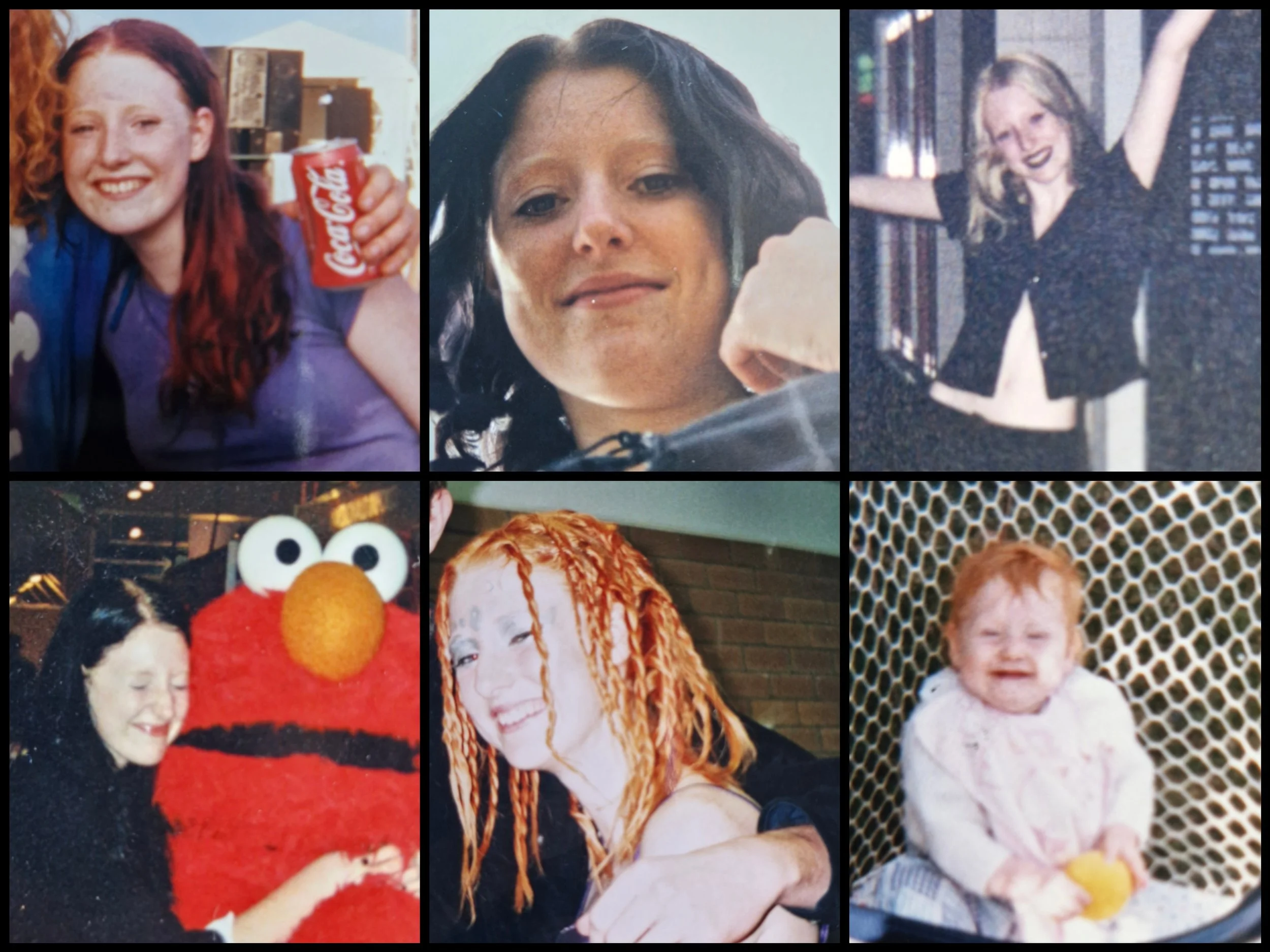
Photos of me in the 90’s, plus a bonus baby photo
The mask works until it doesn't
For years, I managed my needs through structure, planning, isolation, and sheer determination. But eventually, I found that no matter what I did, I just wasn’t managing anymore.
By the time I got my diagnosis, I was already deep in autistic burnout.
I’m not talking about burnout that comes from working too hard and recovers with rest. Autistic burnout is a different phenomenon, and according to a 2025 systematic review of 48 studies, it involves debilitating exhaustion, loss of functioning, and increased disability. Chronic masking, sensory and social overwhelm, societal stigma and everyday life challenges with insufficient support all contribute to the development of autistic burnout, and make it worse (Ali et al., 2025).
You can’t try harder, rest more, and simply recover from autistic burnout.
For me, it shows up in every part of my life through the regression of my capacity, skills and tolerances:
Executive functioning is harder: decision paralysis, difficulty starting or switching tasks, worsening time blindness and overwhelm over the planning I need to function
Communication is harder: finding words becomes difficult when I’m overloaded or overwhelmed, and sometimes I can't explain myself even when I desperately want to
Capacity is lower: I’ve always worked hard, but now struggle to work a mere 2 days per week (admittedly, in a high-energy, dynamic environment) before exhaustion and physical, neurological and emotional challenges get too high.
Sensory tolerance is lower: lights are brighter, sounds are louder, textures are more uncomfortable, and things I could previously tolerate are now intolerable
Emotional regulation is harder: regular meltdowns and shutdowns from exceeding my emotional capacity, and it takes longer to recover from them
Energy capacity is lower: sleep and rest aren’t enough to fix this level of exhaustion
Physical symptoms: gut symptoms from comorbid dysautonomia (a nervous system condition) increase when I’m overwhelmed, becoming one of my most reliable stress indicators.
I’m not less intelligent than I used to be, I’m not broken, and I haven’t stopped trying or caring. But my capacity has changed significantly. The answer to autistic burnout isn’t expecting someone to try harder or do more. Often, the answer is to reduce demands, increase support, and allow enough recovery time so we can rebuild our capacity.
And nobody talks enough about the saddest part of all. I built a life and a family I was proud of, contributed meaningfully to my jobs, my community and society. I showed up with passion and energy for people and causes that mattered to me. But now, I’ve lost so much of that. I’ve lost so much of myself. And as someone who has spent almost the last 3 decades being fiercely independent, it’s extra hard to bear.
The truth is, I’m disabled. And by not understanding my support needs, let alone meeting them, I’ve become functionally more disabled over time.
The NDIS changes make this fear very real
I had my first session with a support worker this week, and I cried when they left. It renewed my hope that things will get better and easier in time. But like so many Australian Autistics, I’m almost certainly going to lose this support.
On 19 August 2026, the new NDIS Amendment Bill was passed through Parliament. This Bill aims to cut $37.8 billion funding over 4 years and is expected to remove 240,000 participants by 2031 - the biggest cohort of which is likely to be autistic participants with low to moderate support needs (The Guardian, 2026; ABC, 2026).
We’re told that Thriving Kids will support our autistic kids. But even if they develop an amazing scheme that does exactly what they say it will, what support is there for our autistic teens and adults?
My own children are teens and have minimal support funding, but what they do have has made an enormous difference to their growth, development and participation. These are supports we simply wouldn’t be able to access without NDIS, especially with my own disabilities impacting our financial stability. Losing those supports doesn’t remove the needs, it just shifts them onto families that are already approaching breaking point.
Sustainability and fraud prevention are obviously important for the future of the NDIS. But this Bill directly removes the supports that help prevent autistic kids from becoming depleted, overloaded adults, and leaves nothing in their absence, not even hope.
This is where early inclusion matters
“My needs are the problem”.
This is what we’re teaching children when we expect them to tolerate overwhelming environments, hide their differences and push through when they need support. I know first-hand how damaging that lesson is, and it can follow you from childhood into adulthood to shape every part of your life - education, employment, relationships and even health - for decades.
We’re diagnosing autism at higher rates than ever before, but as a society we still lack understanding, empathy and meaningful supports for autistic Australians. The ABS last estimated 290,000 autistic Australians in 2022 (ABS, 2022), although the real number is almost certainly higher with people who are undiagnosed, and those can’t access or afford formal diagnosis.
So, we have our diagnoses, but a noticeable lack of tools, environments or accommodations so that we can participate safely and sustainably.
When external support is reduced or removed, the regular places where children learn, play and participate become even more important. It’s not fair to expect children to tolerate, hide and push through, and environments need to adjust to better support them. Government spending might be reduced, but the result is communities having an increased collective responsibility to provide this support.
The goal of early inclusion isn’t just about childhood participation. It’s about providing enough support to make participation safe and sustainable over time. And it’s about teaching autistic children (and the autistic adults who never had the opportunity to learn) that they deserve support.
One last thought
I don't want the next generation of bright, capable, people-pleasing autistic children to grow up believing their only path forward is to push themselves until they break.
I want them to grow up knowing their needs are real, their contributions matter, and support is not something they have to earn by becoming completely depleted first.
I wish I had known that sooner.
That’s why I created the EPIC Participation Framework. Every autistic child deserves to participate, belong and thrive. If you'd like to know more about how to build this into your school or program, follow along for more insights 💙🌊
References
Ali, D., Bougoure, M., Cooper, B., Quinton, A. M. G.; Tan, D.; Brett, J.; Mandy, W.; Maybery, M.; Magiati, I. & Happé, F. (2025). Burnout as experienced by autistic people: A systematic review. Clinical Psychology Review, 122. https://pubmed.ncbi.nlm.nih.gov/41207162/
Australian Bureau of Statistics [ABS]. (2022). Autism in Australia, 2022 (published October 2024). https://www.abs.gov.au/articles/autism-australia-2022
Australian Broadcasting Corporation [ABC]. (2026). People with autism to be at centre of 160,000 NDIS removals. ABC News. https://www.abc.net.au/news/2026-04-22/ndis-participant-removal-autism-focus/106593430
The Guardian. (2026). New NDIS eligibility rules will cut 241,000 participants from scheme in four years, documents reveal. The Guardian. https://www.theguardian.com/australia-news/2026/may/28/ndis-document-reveals-241000-disability-participants-cut-in-four-years
Visit these pages for more information:
Blog Post: Just Being in the Room Isn't Enough - Participation Without Belonging
Blog Post: Returnability: The Measure of Inclusion That Actually Matters
Blog Post: Co-Regulation: Sharing the Work of Calming Down
Blog Post: The Regulation Wave: A Reasonable Neurodivergent Crash Out
Blog Post: Hidden Expectations & Hidden Barriers: The Rules No One Tells You & The Challenges No One Sees.
Blog Post: The Participation Pathway: Why Some Children Check Out Before Participation Begins
Blog Post: That Hidden Cost of Joining In (And Why Some Kids Pay More)