The Regulation Wave: A Reasonable Neurodivergent Crash Out.
Estimated Reading Time: 4-5 minutes
Ever had a neurodivergent child who seemed fine… until they suddenly weren't? A meltdown, a shutdown, or a refusal that seemed to come from nowhere?
There’s a good chance that crash wasn't sudden. The signs were just quiet.
The EPIC Participation Framework™ teaches us that everyone moves through internal regulation states - Underwhelmed, Engaged, Overwhelmed - like waves. Most of the time, we only notice the wave when it crashes. But the shift has been happening for a while.
For neurodivergent people, and neurodivergent children in particular, these shifts can be faster, bigger, or harder to notice from the outside. They're not being dramatic or difficult. Their nervous system is responding to what's around them, and sometimes it tips over.
A "reasonable crash out" isn't misbehaviour. It's information that tells us the environment asked too much, or the child didn't have enough support to stay in that Engaged sweet spot.
So instead of asking "what's wrong with this child?", let's ask: what was happening before the crash? What regulation state are they in? And what helps them come back to engagement?
What the Regulation Wave Looks Like:
Underwhelmed - not enough going on. The child might seem bored, restless, zoned out, or seeking stimulation. They're not being lazy. Their nervous system is asking for more input.
Engaged - the sweet spot. Calm enough to join in, focused enough to learn. This doesn't mean perfectly still or quiet. It means they have enough regulation capacity for what's being asked.
Overwhelmed - too much demand. Meltdown, shutdown, withdrawal, lashing out. By the time you see this, the wave has been building. The child isn't "bad" - their nervous system has tipped over.
A “crash out” will often come from the Overwhelmed state.
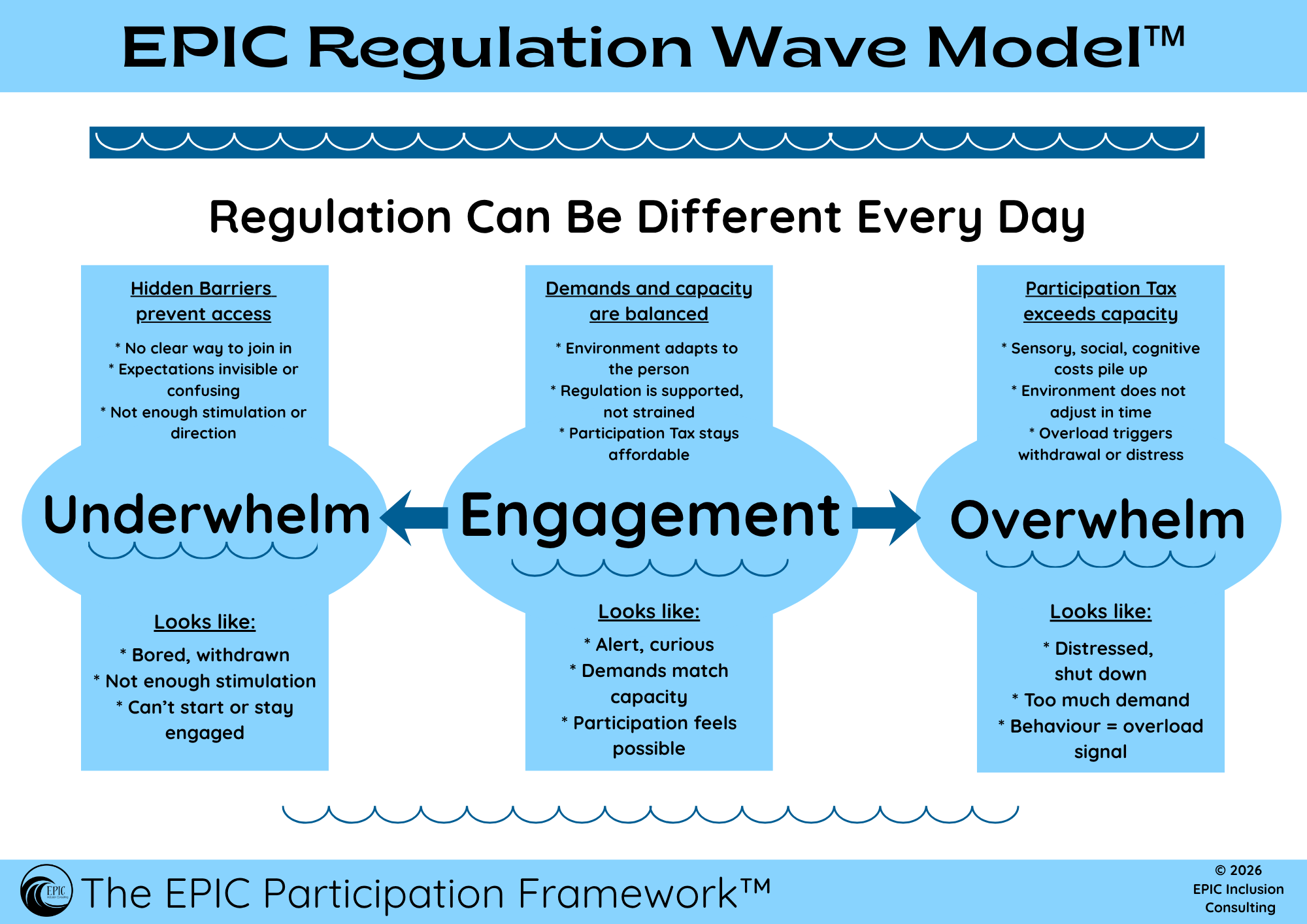
The EPIC Regulation Wave Model
Overwhelmed: Quiet Signs Before the Crash
Before a child tips into overwhelm, look for small signals:
Tense shoulders, faster breathing
Fidgeting that gets more intense
Going very quiet or very still
Avoiding eye contact or turning away
Small repetitive movements (rocking, humming)
These quiet signs are invitations to adjust the environment. You might lower the sensory load, offer a break, reduce demands or co-regulate with a calm voice.
After the Overwhelm Crash: Supporting Return to Engagement
If a child is already overwhelmed, they can’t learn, listen, or follow instructions. They need safety, quiet, and time.
Stop talking. Your words are extra noise.
Reduce sensory input. Dim lights, move to a quieter space.
Stay nearby, calm and quiet. Your presence is the support.
Don’t demand eye contact or explanations. They can’t give it.
After they settle, offer a low‑pressure way back in. A choice, a simple task or a quiet moment beside you.
The goal isn't to stop the crash from ever happening (that's unrealistic). The goal is to make sure the child can return to the Engaged state and still feel like they belong.
Underwhelmed: Quiet Signs Before the Slump
Before a child slips into underwhelm, look for small signals:
Restlessness or fidgeting that seems bored, not stressed
Zoning out, staring into space
Making repetitive noises (humming, tapping)
Seeking sensory input - rocking, spinning, touching things
Withdrawing from the activity without visible distress
These quiet signs are invitations to add gentle input. You might add movement, offer a fidget tool, change the task, or engage a preferred interest.
After the Underwhelm Slump: Supporting Return to Engagement
Underwhelmed children don't need to be punished or told to "focus harder." They need more appropriate input.
Add movement. A quick stretch, a walk to the door, or a wiggle break helps.
Increase sensory input gently. Offer a fidget tool, turn on some music, or change the lighting.
Change the task or offer choice. "Would you like to draw or write?" or "Let's try a different activity."
Engage them with a preferred interest. Bring in a topic they love.
Check if they need connection. A quiet one‑on‑one moment can reset their engagement.
The goal is to raise the input to a manageable level - not to overwhelm them further.
Quiet Signs of Engagement
Before a child settles into engagement, look for these small signals:
Calm, even breathing
Body relaxed (not stiff or tense)
Eyes softly focused (may not be direct eye contact, but attention)
Responding to instructions or cues, even if delayed
Joining in at their own pace - for example, quietly watching then participating
Small, self‑regulated movements (fidgeting that stays contained, not escalating)
Humming or talking softly to themselves (self‑regulation, not disruption)
These quiet signs indicate the child has enough regulation capacity for what's being asked.
Your job now is to protect that state - keep sensory load low, maintain predictability, and avoid sudden demands that could tip them toward overwhelm or underwhelm.
What This Means for Educators and Program Leaders
You don't need to be a therapist or behaviour expert. You just need to notice where the wave is and respond with curiosity, not control.
Watch for early signals. Aim to notice before a crash (overwhelm) or a slump (underwhelm). That's your window to adjust demands.
Create a regulation corner. Not a timeout. A safe, quiet reset spot where children can go to calm down or wake up.
Offer breaks before they're needed. "In five minutes, we'll have a movement break" (helps overwhelmed children) or "Let's stand up and stretch" (helps underwhelmed children).
Never demand "calm down" from an overwhelmed child. They can't. Instead, lower sensory input, reduce talking, offer quiet presence.
For an underwhelmed child, don't demand "focus." Add gentle input - movement, a fidget tool, a change of task, or a preferred interest.
The most common mistake? Trying to teach, coach, or discipline an overwhelmed child. When the wave is crashing, they can’t learn. They can’t listen. They need safety, quiet, and time.
For Parents Reading This
You've seen the Regulation Wave at home. Trust what you see. Your child isn't manipulating you - if they’re not engaged, they're likely either overwhelmed or underwhelmed. And you're not failing. Regulation is about the environment and the nervous system, not your parenting.
Sometimes your child needs less (quiet, space, low demands). Sometimes they need more (movement, engagement, a change of scene). Both are valid.
Share this with your child's teacher or program leader. Help them understand that a "reasonable crash out" - or a "checking out" - is information, not bad behaviour.
One last thought
The Regulation Wave isn't a problem to fix. It's a reality to understand. When we stop asking "what's wrong with this child?" and start asking "where are they on the Regulation Wave right now?" - everything changes. Children aren't giving you a hard time. They're having a hard time. And you can help them come back.
You don't have to manage this alone
The EPIC Participation Framework helps educators and program leaders understand regulation and design environments that support it. If you're ready to look at behaviour differently - let's talk.
Visit these pages for more information:
Blog Post: The Participation Pathway: Why Some Children Check Out Before Participation Begins.
Blog Post: That Hidden Cost of Joining In (And Why Some Kids Pay More)