What Neurodivergent Behaviour Is Really Telling You: A Practical Guide to the Regulation Wave
Estimated Reading Time: 4-5 minutes
What do you do when a neurodivergent child has a meltdown or a shutdown? When they refuse or withdraw?
Most of us would respond to these moments reactively. We manage the situation, calm things down, and move on. But when we only react to the behaviour, we miss what was happening before it. And we miss the chance to prevent it next time.
The EPIC Participation Framework introduces the Regulation Wave-a way of understanding that all of us move constantly between states of underwhelm, engagement, and overwhelm. For neurodivergent children especially, those shifts can be faster and more intense. Behaviour isn't the whole story. It's a signal about where the child is on the wave right now.
Understanding The Regulation Wave
The Regulation Wave has three states:
Underwhelmed - not enough going on. Bored, restless, zoning out, seeking stimulation.
Engaged - the sweet spot. Calm enough to participate, focused enough to learn.
Overwhelmed - too much demand. Meltdown, shutdown, withdrawal, lashing out.
Most of us only notice the wave when it crashes. But the wave has been moving long before that - and the earlier you spot it, the more you can do.
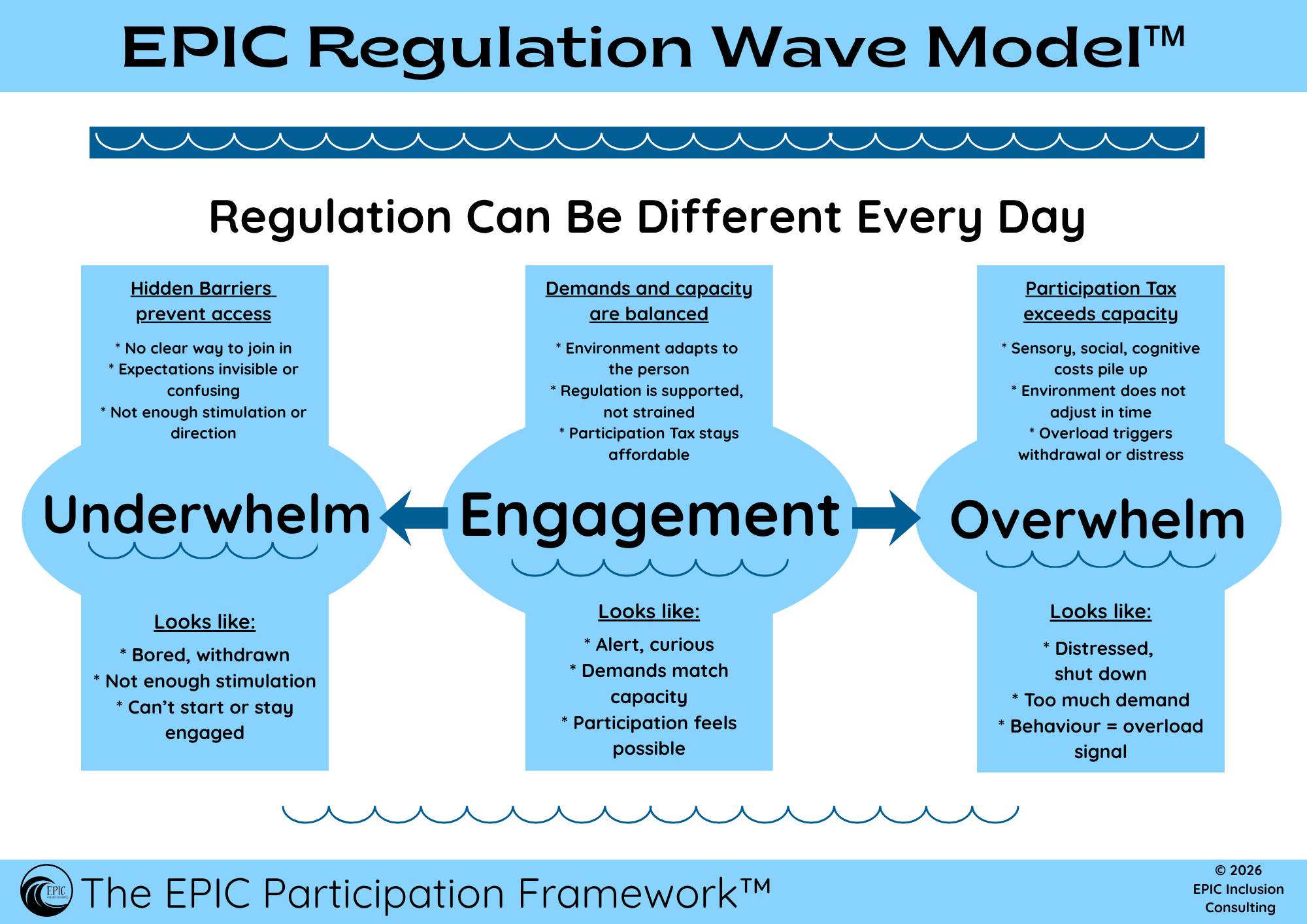
The Three States of the EPIC Regulation Wave
Responding to the state, not the behaviour
When we react to behaviour, we often make things worse - raising our voice, adding consequences, demanding explanations from a child whose nervous system is already overloaded.
When we respond to the regulation state, we can actually help.
Responding to the state means asking: where is this child on the wave right now? What do they need? And then offering that. Here's what that looks like in practice.
When a child is Underwhelmed
Their nervous system is asking for more input - they're not being lazy or disengaged on purpose.
What helps:
Add gentle movement - a stretch, a walk, a fidget tool
Offer a change of task or a choice between activities
Use a preferred interest to re-engage them
Offer a quiet one-on-one moment if connection might be what they need
What doesn't help: demanding they focus, telling them off for not paying attention, or waiting for them to snap out of it on their own.
When a child is showing early signs of Overwhelm
Fidgeting, tense shoulders, going quiet, withdrawing. This is your time to act - the child is still in or near the Engaged state, but the wave is starting to rise. Your response now can prevent a crash.
What helps:
Lower your voice and slow your movements
Offer a choice to restore a sense of control
Suggest a break before it's needed - "Let's get a drink of water"
Reduce demands - "You don't have to finish this right now"
What doesn't help: telling them to calm down, increasing pressure, or ignoring the signs and hoping they'll pass.
This is the most important moment in the Regulation Wave. In classrooms and community programs alike, catching the early signs and responding gently is often the difference between a child staying engaged and a child crashing out.
When a child is Overwhelmed
They can’t learn. They can’t listen. They can’t reason. Their nervous system has tipped over.
What helps:
Stop talking - your words are extra noise right now
Stay nearby, calm, and quiet
Reduce sensory input - dim lights, move to a quieter space if possible
Wait, without demands
What doesn't help: talking more, demanding explanations, giving consequences, or asking them to calm down.
A neurodivergent child in full meltdown or shutdown needs safety, quiet, and time - not a lecture.
Protecting the Engaged state
When a child is in the Engaged state, our job is to protect it, not just notice it.
Predictable routines, manageable sensory load, warm greetings, and advance warning of changes all help neurodivergent children stay regulated. Sudden changes, unaddressed early overwhelm signals, and assuming the child will continue to engage on their own are the most common ways we accidentally push the wave to crash.
Your wave matters too
The Regulation Wave doesn't only apply to children. As an educator or program leader, you move along the same wave, and your state directly affects the children around you. Neurodivergent children are particularly sensitive to the emotional and nervous system states of the adults in the room. When you're calm and regulated, you become a co-regulating presence. When you're overwhelmed, it's significantly harder to respond rather than react, and harder for a dysregulated child to settle.
This isn't about being perfect. It's about awareness. Before responding to a child in distress, take a breath and ask yourself: where am I on the wave right now? If you're overwhelmed too, buy yourself a moment (step back, slow down, lower your voice) before stepping in.
For parents reading this
You understand your neurodivergent child’s Regulation Wave better than anyone. You know when your child is about to crash, and you know when they're zoning out and need more input. Trust your judgement.
When you're talking to teachers or program leaders, share what you know: what the early signs look like for your child, what helps them regulate, and what tends to push the wave. That information is genuinely useful, and good educators and program leaders want it.
About the EPIC Participation Framework
The Regulation Wave is one of the concepts at the heart of the EPIC Participation Framework, which I'm currently putting the finishing touches on. If you'd like to be among the first to know when educator and program leader training becomes available, follow me for updates, and if you'd like support in your setting in the meantime, I'd love to hear from you.
One last thought
The Regulation Wave is one of the concepts at the heart of the EPIC Participation Framework, which I'm currently putting the finishing touches on. If you'd like to be among the first to know when educator and program leader training becomes available, follow me for updates - and if you'd like support in your setting in the meantime, I'd love to hear from you.
Visit these pages for more information:
How-To Series:
EPIC Framework Concept Series
Blog Post: Just Being in the Room Isn't Enough - Participation Without Belonging
Blog Post: Returnability: The Measure of Inclusion That Actually Matters
Blog Post: The Regulation Wave: A Reasonable Neurodivergent Crash Out
Blog Post: Hidden Expectations & Hidden Barriers: The Rules No One Tells You & The Challenges No One Sees.
Blog Post: The Participation Pathway: Why Some Children Check Out Before Participation Begins
Blog Post: That Hidden Cost of Joining In (And Why Some Kids Pay More)
EPIC Website Info